
industry
Wellness and yoga
Headquarters
CT, USA
Founded
2016
Amazon role
Primary e-commerce channel

Florensi is a focused wellness and yoga brand with a tight Amazon catalog that changed ownership in 2026. The business had once been a multi‑million‑dollar channel, but after a period of underinvestment and operational drift, revenue had fallen sharply and its team no longer trusted Amazon as a growth driver.
Florensi’s new ownership set three priorities for Amazon: stabilize performance, fix inventory so cash wasn’t stuck in slow SKUs while bestsellers stocked out, and get the channel back on track ahead of a planned push in late 2026 and 2027 toward a long‑term $10M sales goal.
It was clear that inventory, ads, and pricing were pulling in different directions, so Florensi engaged Capline.
The Insight
When Capline analyzed Florensi’s business, three issues showed up at once. A significant share of recent demand had gone unserved because core products were out of stock, while extra capital sat in slower and excess inventory. In parallel, most ad spend wasn’t profitable, not because shoppers didn’t want the products, but because bids and targeting weren’t aligned with margins.
Florensi needed a single model that dictated which SKUs to keep in stock, which ads to fund, and where prices could move, all tied back to contribution profit.
Florensi engaged Capline for full-service management across the US and Canada, with Phase 1 focused on fixing advertising & inventory.
Capline launched and scaled its pricing-aware ads platform and shifted spend toward profit-maximizing scenarios. That meant cutting back where ACoS was running above gross margin and rebuilding campaigns with better targeting depth and control.
To connect everything together, Capline built SKU-level demand forecasts and combined them with Florensi’s advertising plans, lead times and MOQs to create replenishment recommendations by ASIN. The goal was to recover lost sales, keep winners in stock, and free cash trapped in slower-moving inventory.
Florensi’s Amazon business snapped into shape in just weeks.
Weekly revenue climbed 34%, while contribution profit rose 44%, even as capital was pulled out of slow, overstocked SKUs.
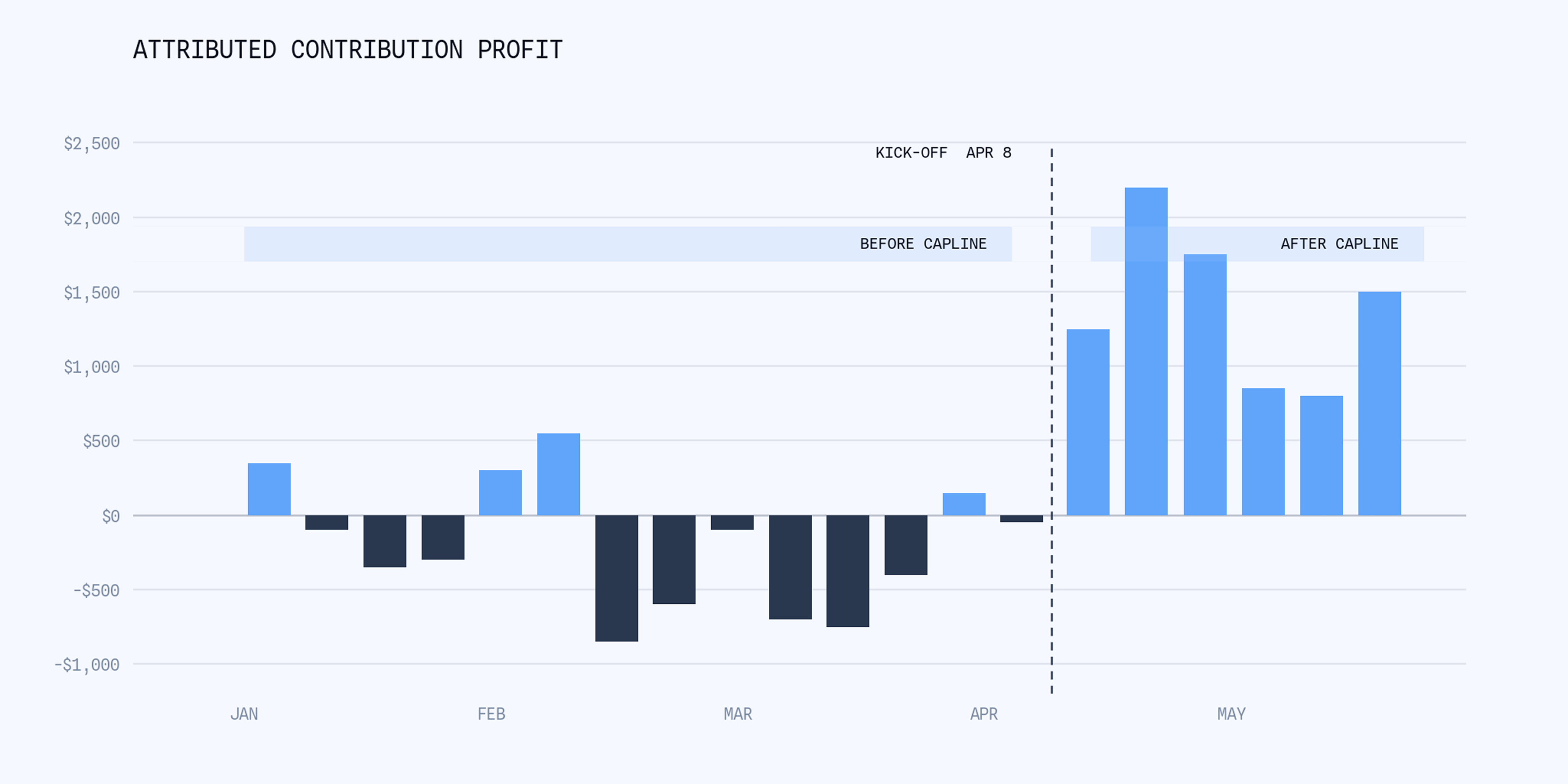
Advertising flipped from a drag to a growth driver. In the first month, weekly ad-attributed sales jumped 62% and ad-attributed contribution profit swung from negative to very positive.
And all without that new-agency downturn, and it’s just the beginning.
weekly average revenue
weekly average contribution profit
weekly average revenue
from initial loss position weekly ad-attributed contribution profit