20%+
Increase in contribution margin while maintaining sales
100%
Elimination of unprofitable promotions
+40%+
Increase in unit sales
Pricing decisions backed by data science and unit economics
Before pricing changes go live, multiple scenarios are modeled against demand, conversion behavior, competitive positioning, and financial impact to understand likely outcomes.
- Elasticity-based pricing models
- Market and competitor signals baked in
- SKU-level pricing scenarios
- Financial impact forecasting
- Use pricing as a lever to dynamically to optimize inventory and working capital

Promotional calendars built around profit and connected to the rest of your business
Promotions are planned using demand forecasts, inventory availability, and profit impact before they are scheduled, supporting long-term growth.
- Promotion performance forecasting
- Selection of profitable promotions
- Inventory planning for promotions
- Promotion timing strategy

Pricing strategy that evolves with the market
Consumer behavior, competitor activity, and market conditions shift constantly. Pricing updates as the market moves, so you're not defending a number that made sense six months ago.
- Continuous pricing monitoring
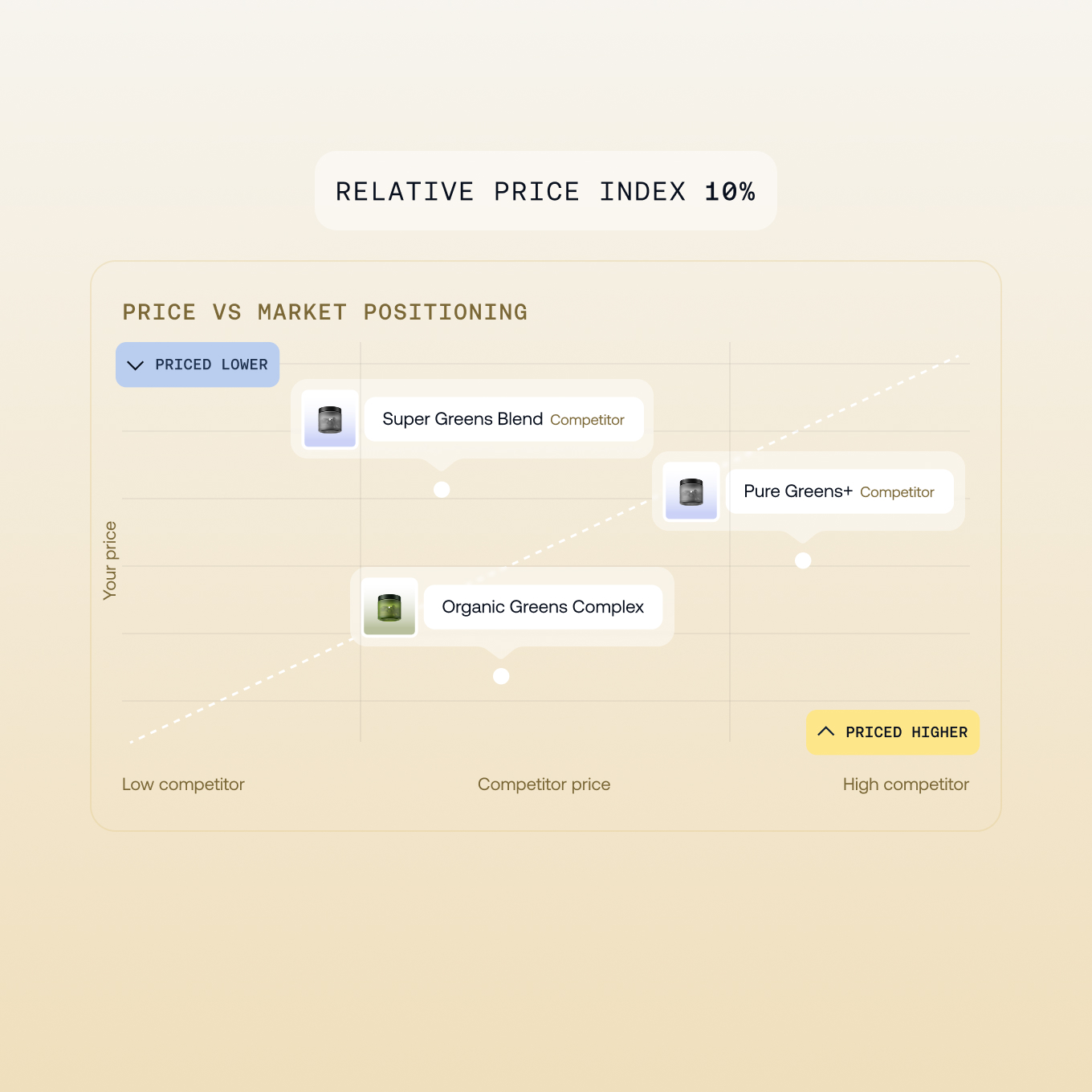
- Competitive position tracking
- Support for daily to quarterly pricing changes
- Data-driven, product and brand-level competitor identification
Better decisions.
Stronger outcomes.

Pricing decisions backed by data science
Pricing decisions stay focused on sustainable conversion and long-term performance.

Lean into profitable discounting
Promotions are evaluated before launch instead of reacting after performance drops.

Make more informed pricing decisions
See profit impact before changing prices.

+43%
Weekly Ad Sales
+54%
Weekly Ad CP
"Capline delivers exactly what we look for in a partner: sharp people who treat our Amazon channel like their own business. Since partnering with them, we have seen a step-change in profitability across our portfolio. Several brands have seen contribution profit more than double versus our pre‑Capline baseline, with ad profit and sales both growing over 100%. That is impact that shows up directly in our P&L."
Select what you need
Advertising
Bids built around product-level margins, conversion efficiency, and bid elasticity so every ad dollar goes where it makes a difference.
Forecasting
Advanced ecommerce forecasting built around sales trends, planned advertising activity and planned promotions and pricing changes.
Inventory
Inventory management built around stock position, replenishment timing, product movement, and working capital efficiency.
All-in-one
Pricing & promotions FAQ
How do I know if I should raise or lower prices?
The answer depends on how sensitive customer demand is to price changes. Understanding price elasticity helps estimate how revenue, profit, and unit sales are likely to respond before making adjustments.
How much can I increase prices before sales decline?
Every product behaves differently. Some products can absorb significant price increases with minimal impact on demand, while others are highly price-sensitive. Historical sales behavior and elasticity modeling provide the most reliable guidance.
Do discounts always increase profit?
Not necessarily. Many promotions generate additional sales volume while reducing overall profitability. The most effective promotions are evaluated based on incremental long term contribution profit.
How often should ecommerce businesses review pricing?
Pricing should be reviewed continuously as costs, competitors, advertising efficiency, inventory levels, and market conditions evolve. Many businesses benefit from weekly, monthly or quarterly pricing updates supported by ongoing monitoring.
How do competitors affect pricing strategy?
Competitor pricing influences conversion and market share, but matching competitors is not always the right decision. Effective pricing strategies consider differentiation, margin structure, customer behavior, and long-term business objectives.