50%+
Reduction in stockouts
150%
Accuracy / MAPE improvement
70%
Bias reduction
Data-science driven demand forecasts for your whole catalog
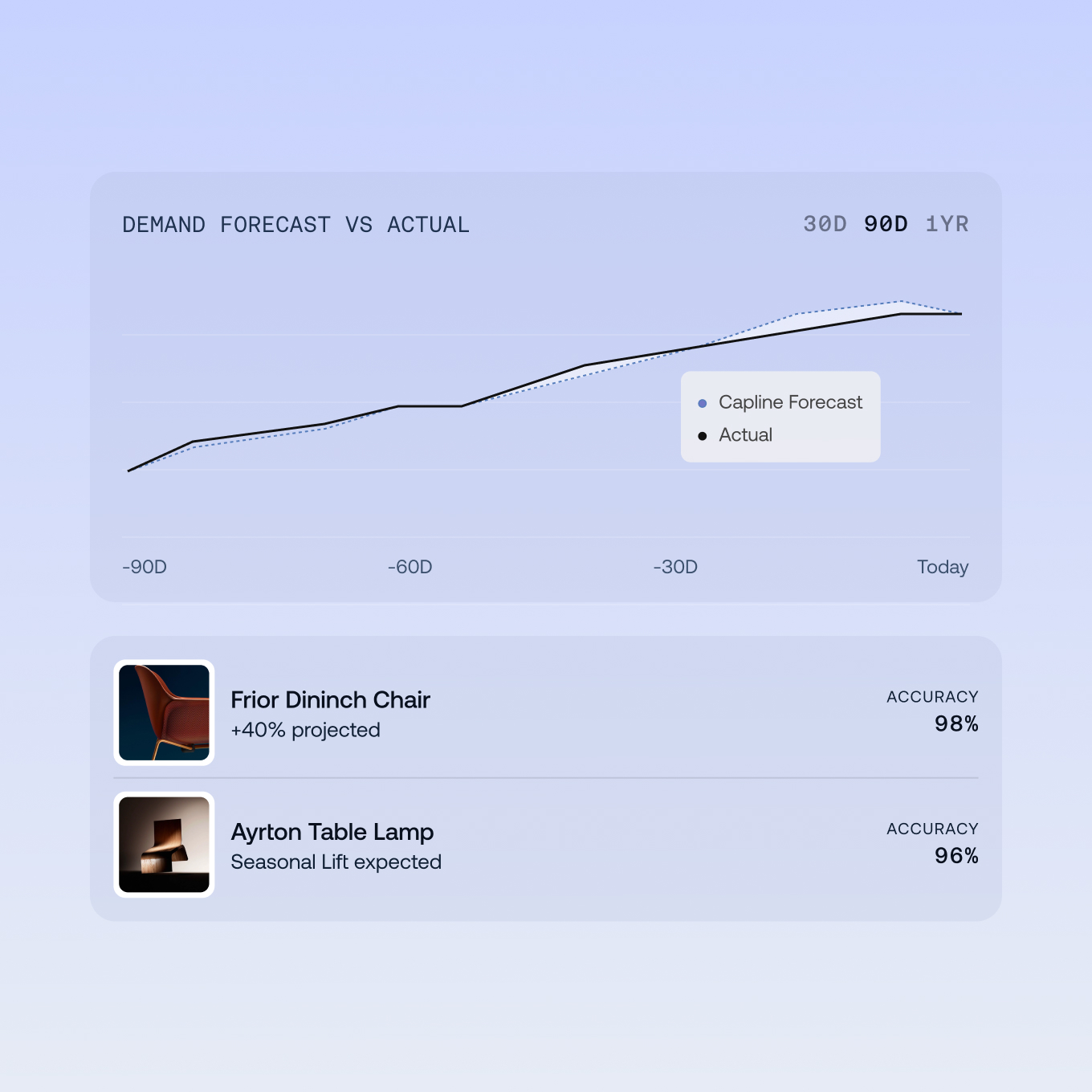
Forecasts that support inventory purchasing and placement decisions before stockouts or excess inventory materialize.
- Sales projections and purchasing recommendations
- Inventory plans informed by forecasts, lead times, purchasing plans, and supply chain inputs
- Seasonal trend forecasting
Planning informed by forward-looking signals
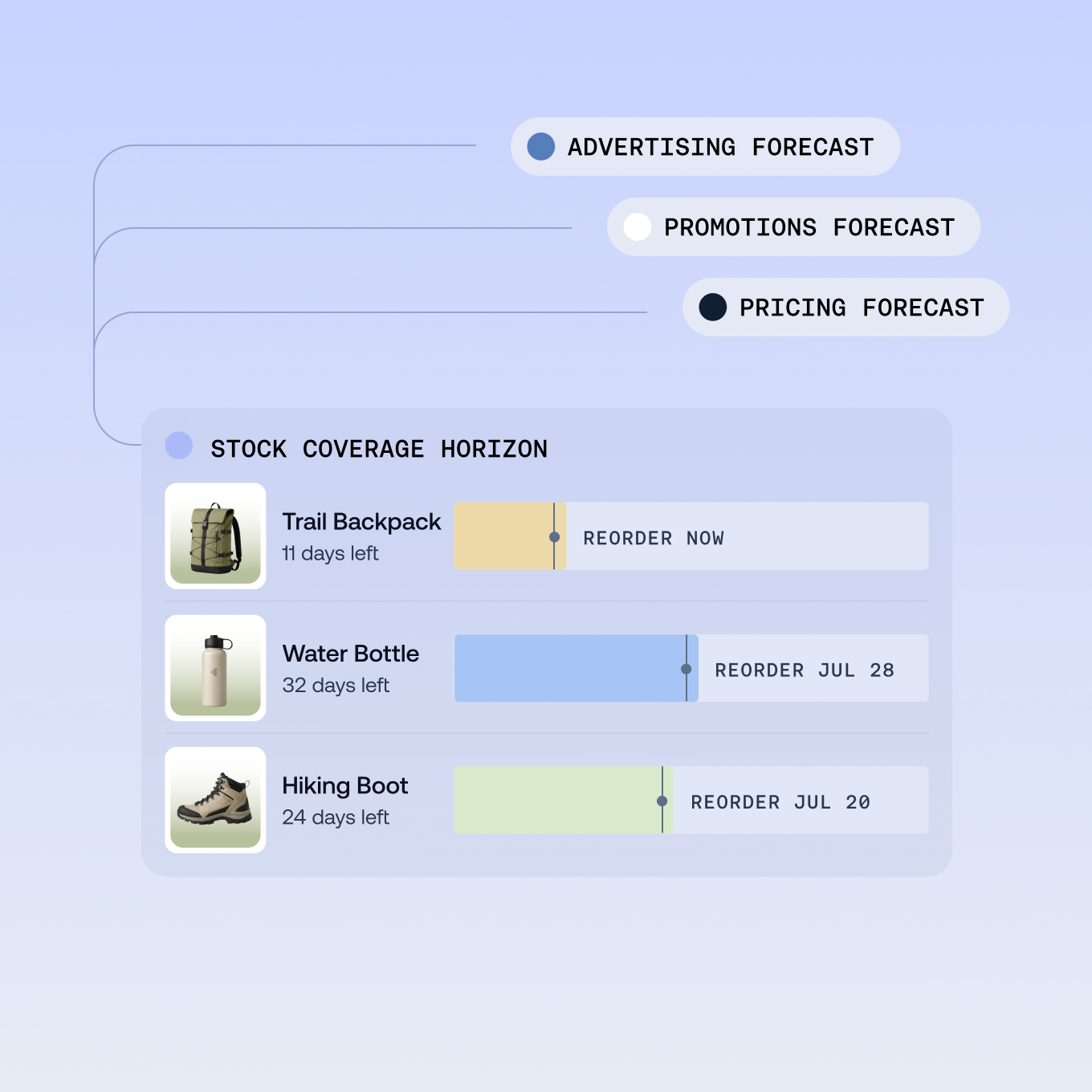
Forecasts leverage causal measurement across advertising, pricing, promotions, and inventory signals to reflect expected demand more accurately.
- Advertising impact forecasting
- Forward-looking pricing and promotion forecasting
- Inventory availability and purchasing recommendations
- Forecasts leverage causal measurement across advertising, pricing, promotions, and inventory signals.
Dynamic forecasts that evolve as consumer behavior and business realities change
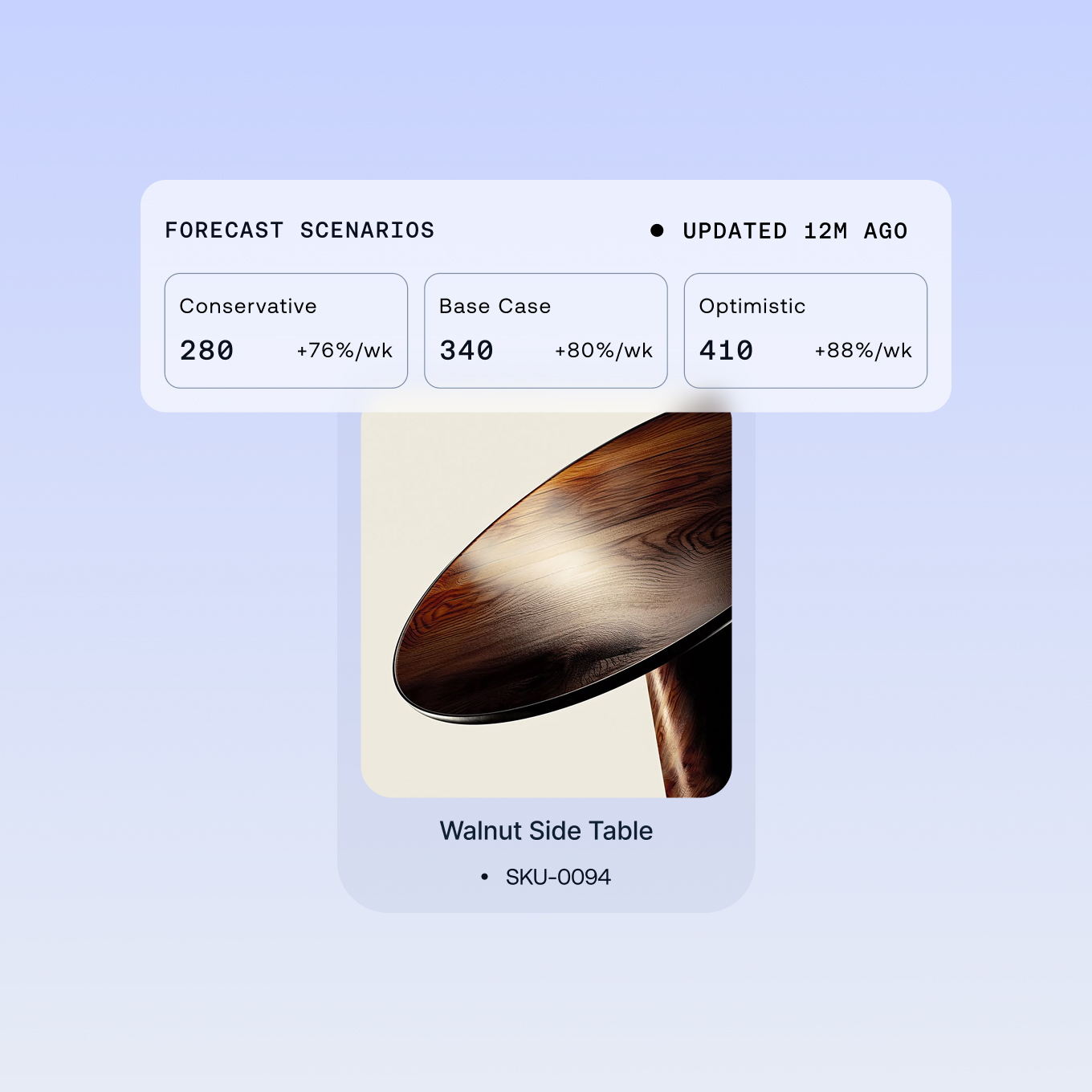
Forecasts update as demand, pricing, promotions, advertising activity, and seasonality change.
- Forecast updates tied to pricing, advertising, and promotions
- Trend monitoring
- Demand scenario planning
Better decisions.
Stronger outcomes.

Improve planning accuracy
Forecasts help teams prepare earlier around expected sales movement.

Align purchasing with demand
Purchasing and allocation decisions reflect expected sales and contribution profit.

Make decisions earlier
Forecast upcoming sales changes before they hit purchasing and operations.
Select what you need
Advertising
Bids built around product-level margins, conversion efficiency, and bid elasticity so every ad dollar goes where it makes a difference.
Pricing & promotions
Pricing and promotions built around consumer behavior, unit economics, competitive dynamics, and linked to predictable and measurable financial outcomes.
Inventory
Inventory management built around stock position, replenishment timing, product movement, and working capital efficiency.
All-in-one
Forecasting FAQ
What makes ecommerce forecasting accurate?
Accurate forecasts combine historical sales data with seasonality, advertising activity, pricing changes, promotions, inventory availability, and external demand signals.
How far into the future should ecommerce businesses forecast?
Most businesses benefit from weekly operational forecasts, quarterly planning forecasts, and annual strategic forecasts. Different decisions require different forecasting horizons.
Why do traditional sales forecasts fail?
Many forecasts rely heavily on historical averages and fail to account for changing business conditions such as promotions, advertising shifts, stockouts, pricing changes, and seasonal demand patterns.
Can forecasting help reduce stockouts?
Yes. Forecasting allows businesses to identify future demand earlier and make purchasing decisions before inventory shortages affect revenue.
How should forecasts be used in budgeting?
Forecasts help businesses estimate future revenue, inventory requirements, advertising investment, and cash flow needs, allowing financial plans to reflect likely demand conditions.