60%
Reduction in wasted spend
200%
Increase in advertising profit
2x+
advertising efficiency
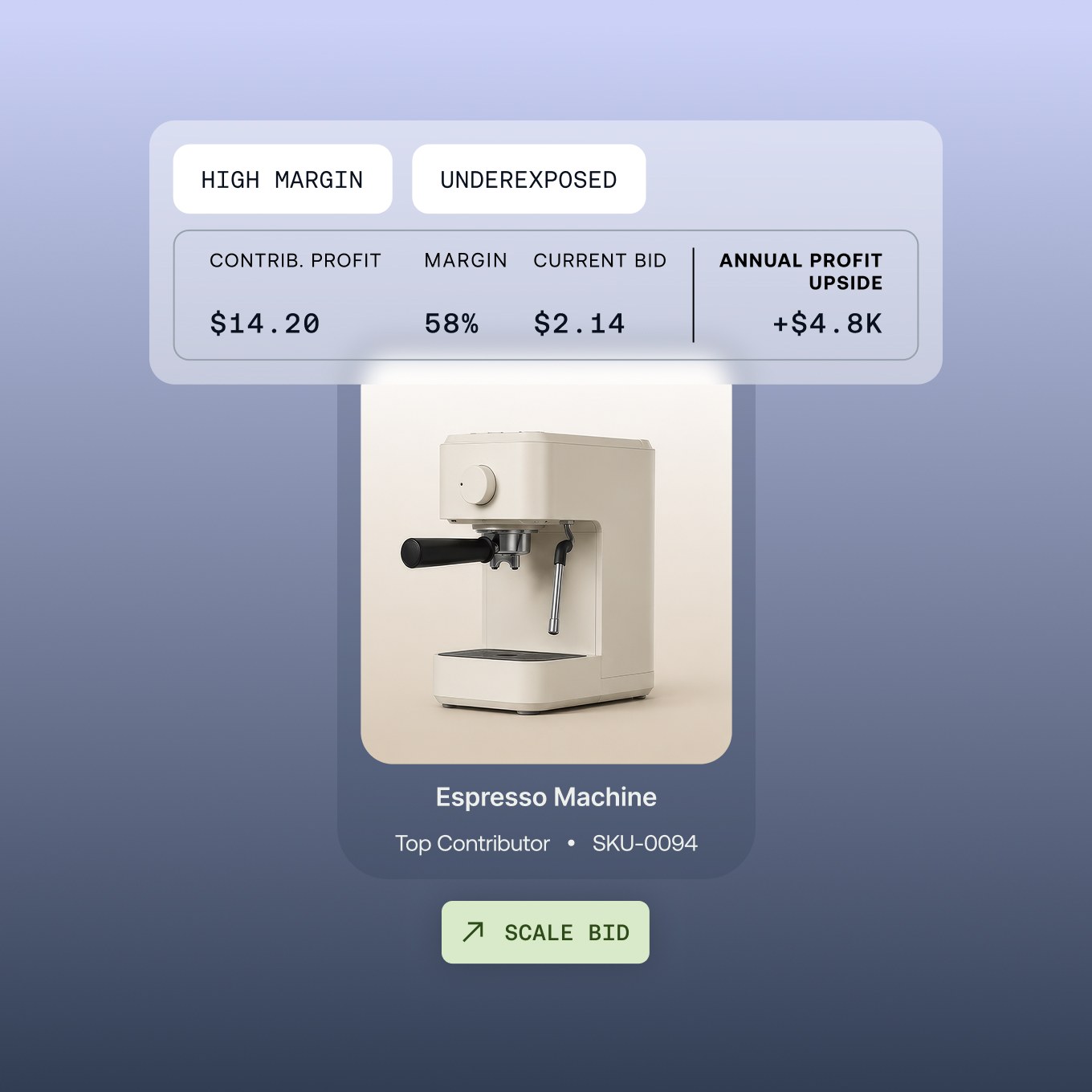
Ad spend built around product-level margins
Ad spend tied to actual contribution profit, conversion efficiency, and real product performance.
- SKU-level, margin-aware contribution profit optimization
- Bidding tied to financial objectives like profitability or market share
- Bids optimized at the product-keyword-hour-ad type-placement-level
Simulate growth before increasing spend
Before spending more, forecast how products are likely to respond to more spend based on conversion behavior, contribution economics, and historical performance.
- Growth scenarios before budget changes
- Budget becomes an output, not an input

Advertising that adapts to changing signals
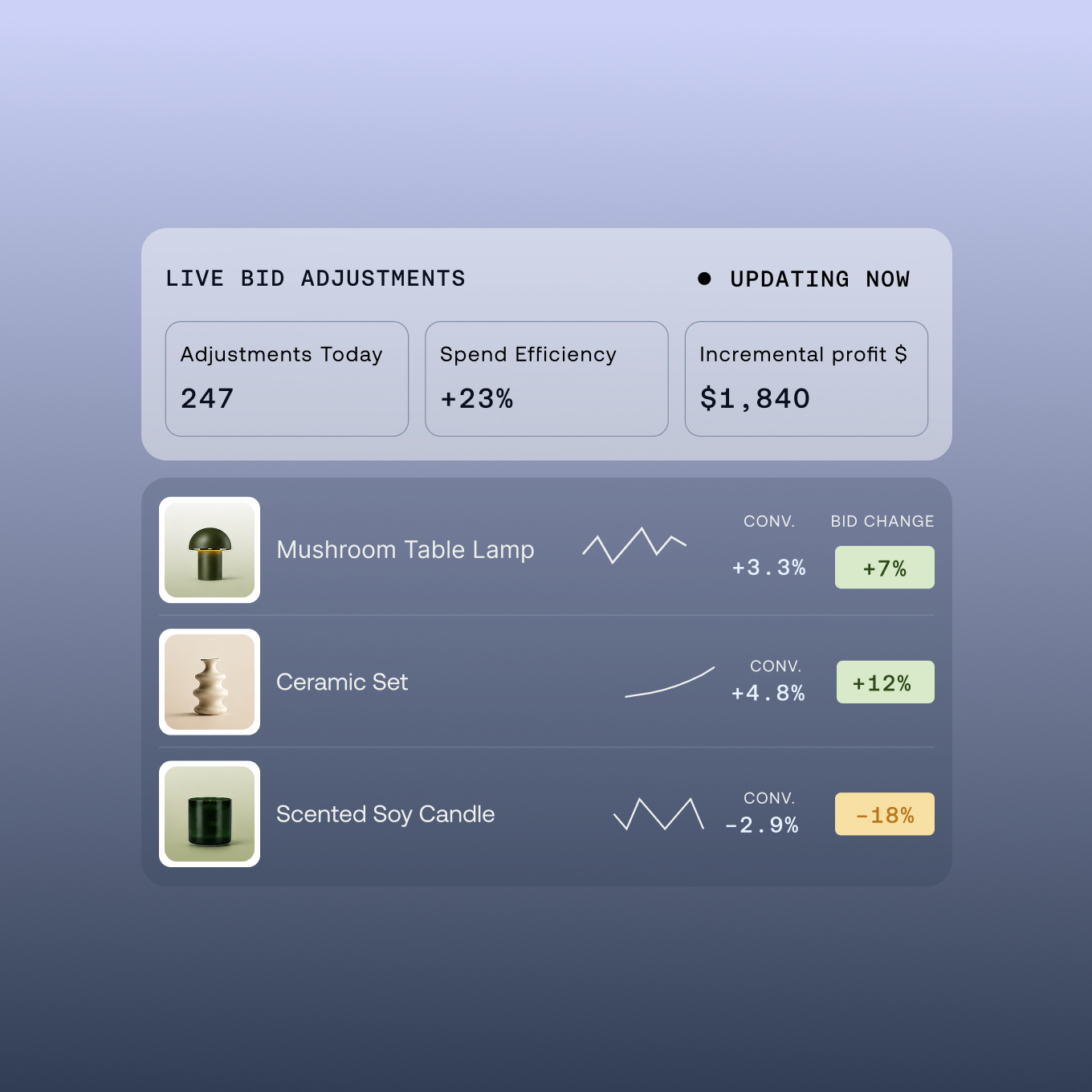
Performance changes constantly across products, campaigns, and channels. Investment decisions adjust based on the latest demand and supply signals.
- Hourly bid adjustments, models retrained daily
- 24/7 performance monitoring
- Models adapt in response to market dynamics, conversion trends, inventory levels, search volume, and margin profile changes.
Better decisions.
Stronger outcomes.

Reduce wasted spend
Budget concentrates where products actually earn it.

Improve advertising efficiency
Spending decisions are tied to product performance.

Scale spend more efficiently
Model the impact of increased ad spend before committing to it.

+34%
weekly average revenue
+44%
weekly average contribution profit
+62%
weekly average revenue
7x
from initial loss position weekly ad-attributed contribution profit

“Before Capline, Amazon was shrinking and tying up cash in the wrong places. Within weeks, we were back in stock on winners, ad dollars were finally making money, and the channel felt investable again. The best part is that the results were immediate, there was no lengthy calibration period that we had to crawl out of.”

Select what you need
Pricing & promotions
Pricing and promotions built around consumer behavior, unit economics, competitive dynamics, and linked to predictable and measurable financial outcomes.
Forecasting
Advanced ecommerce forecasting built around sales trends, planned advertising activity and planned promotions and pricing changes.
Inventory
Inventory management built around stock position, replenishment timing, product movement, and working capital efficiency.
All-in-one
Advertising FAQ
How can I reduce wasted Amazon advertising spend?
The biggest source of wasted ad spend is investing equally across products regardless of their profitability. Effective advertising strategies consider conversion rate, contribution margin, inventory position, and incremental sales impact before increasing spend.
What is a good Amazon TACOS?
There is no universal TACOS target. A healthy TACOS depends on your margins, growth objectives, and category dynamics. The right benchmark is whether advertising generates incremental contribution profit while supporting long-term organic growth.
Should advertising decisions be based on ROAS or profit?
ROAS measures advertising efficiency, but it does not account for product costs, fulfillment expenses, or margin differences between products. Many ecommerce businesses achieve better financial outcomes when advertising decisions are evaluated through contribution profit rather than ROAS alone.
How do I know which products deserve more advertising budget?
Products with strong conversion rates, healthy margins, stable inventory, and demonstrated responsiveness to advertising often present the greatest opportunity for profitable growth. Ad spend should reflect financial impact, not just sales volume.
Why does increasing ad spend sometimes reduce profitability?
Additional spend often reaches lower-converting audiences and more competitive keywords. Without understanding advertising elasticity and contribution margins, increased investment can generate revenue while reducing overall profit.